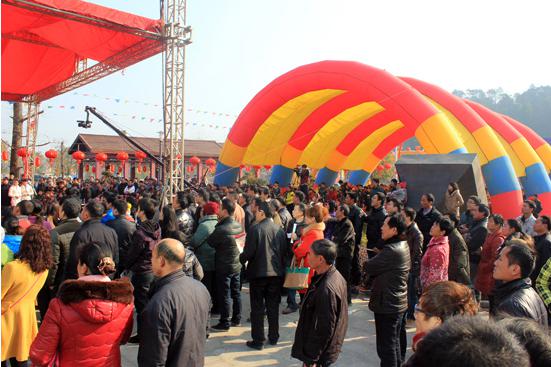
With the rapid development of technology, the promotional methods for corporate brands have become increasingly diverse, from microblog marketing a few years ago to WeChat marketing today, as well as costly print media advertising. Each marketing approach has its own characteristics. Among them, event marketing—a traditional yet evolving method—is increasingly capturing public attention and proving more effective for brand promotion. So, why does event marketing attract public attention?
To understand why event marketing captures public attention, we first need to define what event marketing is.
Event marketing refers to a marketing approach where companies plan large-scale events (such as anniversary celebrations, product launches, annual meetings, etc.) to rapidly enhance brand awareness, reputation, and influence, thereby boosting product sales. Simply put, event marketing is marketing centered around events, using the event as a vehicle to achieve brand elevation or sales growth. Event marketing attracts public attention for the following reasons:
1. Various types of events are inherently limited resources. When an event is first launched, it does not require substantial capital investment; rather, it is more of an intellectual investment. An event with unique creativity is a distinctive resource with immense commercial potential. Like other material resources, such resources are finite. A quick look at festivals, beauty pageants, competitions, and award ceremonies reveals the intense competition among regions for major event "resources."
2. Event marketing itself contains enormous business opportunities. CCTV fully leverages its strong platform and social resource advantages through its integration capabilities. Special programs produced around major events and competitions—such as the annual Host Competition, Singer Competition, Model Competition, and Crosstalk Competition—often become focal points and hot topics for national audiences. It is no exaggeration to say that for CCTV, every major event is a magical "money tree."
Companies often rapidly enhance brand awareness and favorability by naming or sponsoring a special program, and consumers often associate an event with the sponsoring company. For example, "The Voice of China" with JDB, the "National Cooking Competition" with Luhua Peanut Oil, and the "My Favorite Spring Festival Gala Program" sponsored by China Life and Langjiu Honghualang all made the sponsoring companies and the events the focus of national media attention at the time.
3. The integrated communication approach of event marketing aligns with the development patterns of the information age. In today's information age, with an overwhelming amount of information, people's attention has become a scarce resource. Thus, all major media compete fiercely for attention. Whoever wins the eyeballs wins the attention, giving rise to the so-called "eyeball economy." Cities need to build their city brands, and companies need to shape their product brands, all of which require widespread media dissemination. Events, through high-level planning, can create news highlights out of nothing, tailored to the needs of cities and companies.
4. Event marketing enhances the overall brand value of both companies and media. A key indicator of a company's development is the popularity index of its brand among the audience. Gaining awareness is only the first step of a long journey; more importantly, it is about building strong cohesive reputation—what we commonly call a good name—in the minds of the audience. Hosting large-scale events that are participatory and have a social welfare nature is the best way for companies or cities to create momentum, gather attention, and elevate their taste, grade, and brand value.
The most sophisticated marketing is to control scarce information sources, to be a manufacturer of media content, creating topics and selling points that media will follow, allowing media to further develop and disseminate existing news material, and getting free advertising for oneself. For example, the bundling of Mengniu with Super Girl is a successful marketing case.
The world's news high ground is in New York, while China's news high ground is in Beijing. Therefore, many events choose to hold press conferences or launch ceremonies in Beijing to create national influence.
Every event a company hosts is essentially marketing, which is why companies are increasingly willing to spend heavily on event planning companies to organize various events.